Welcome: Xiamen ZoneWu Technology Co., LTD.

qui@zonewu.com
18146178586
Game-Changer in Water Monitoring: LoRaWAN Total Hardness Sensor Solves Hidden Risks of Water Hardness You Ignore
Water is the lifeblood of industries, ecosystems, and human health—but one hidden threat often flies under the radar:
unregulated water total hardness. Measured as CaCO₃ (calcium carbonate), water hardness refers to the concentration of calcium and magnesium ions, and its imbalance can trigger costly equipment failures, health hazards, and environmental damage. For decades, monitoring water total hardness has been plagued by inefficiency, high costs, and limited coverage—until the LoRaWAN Water Quality Total Hardness Sensor emerged as a revolutionary solution. This cutting-edge IoT device is redefining how industries, environmental agencies, and water management teams track, analyze, and control water hardness, turning "reactive crisis management" into "proactive risk prevention."
Before diving into the sensor’s breakthrough capabilities, let’s unpack the critical problem it solves:
why water total hardness monitoring matters more than you think. Hard water isn’t just a nuisance (like limescale on faucets); it’s a silent saboteur across sectors. In industrial production, excessive hardness clogs pipelines, damages heat exchangers, and reduces the efficiency of cleaning agents—costing factories thousands in maintenance and downtime annually. For drinking water suppliers, unbalanced hardness can affect taste, corrode distribution systems, and even impact human health over long-term consumption. In environmental management, abnormal hardness levels in surface water or seawater can disrupt aquatic ecosystems, harming fish and plant life. Traditional monitoring methods—manual sampling, laboratory testing, or wired sensors—are slow, labor-intensive, and unable to provide real-time data, leaving teams blind to sudden hardness spikes until it’s too late. The LoRaWAN Total Hardness Sensor addresses these gaps with a suite of targeted advantages, each designed to solve a specific pain point in water monitoring.
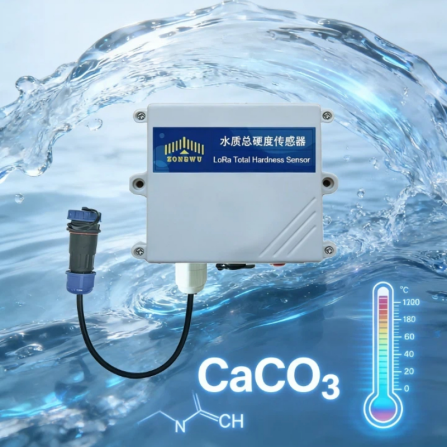
1. Unmatched Measurement Accuracy: Eliminate Misleading Readings for Critical Applications
At the heart of this sensor’s value is its industry-leading measurement accuracy, calibrated specifically to detect total hardness as CaCO₃ with exceptional precision. Unlike budget sensors that often drift by 1mg/L or more—rendering them useless for high-stakes industries—this device detects fluctuations as small as 0.1 mg/L. This level of accuracy is non-negotiable for sectors like pharmaceutical manufacturing (where water purity directly impacts product safety), food and beverage processing (to maintain taste and compliance), and semiconductor production (where even trace minerals can damage equipment). Additionally, the sensor undergoes rigorous pre-deployment calibration and features built-in self-check functionality, ensuring consistent performance over time and reducing the risk of costly errors from inaccurate data.
2. Automatic Temperature Compensation (ATC): Consistent Results in Any Environment
A common flaw in traditional hardness sensors is their vulnerability to temperature changes—and this sensor solves that with its integrated automatic temperature compensation (ATC) function. Water temperature directly alters the behavior of calcium and magnesium ions: colder water can artificially inflate hardness readings, while hotter water can suppress them, leading to misleading data if uncompensated. Traditional sensors require manual adjustments or separate temperature probes, adding complexity, labor costs, and room for human error. The LoRaWAN sensor automatically calibrates its measurements based on real-time water temperature, ensuring reliability whether it’s monitoring icy surface water in winter (-10°C), hot industrial process water (up to 60°C), or temperate drinking water systems. This means you get consistent, actionable data year-round, regardless of environmental conditions.
3. LoRaWAN Connectivity: Long-Range, Low-Power Wireless Monitoring Without Wires
Unlike wired sensors that are limited by infrastructure and expensive to deploy, this device leverages LoRaWAN technology—a low-power wide-area network (LPWAN) solution optimized for IoT devices in remote or hard-to-reach locations. LoRaWAN offers three key benefits for water monitoring: long transmission range (up to 10 km in open areas like lakes or coastal sites, and 2-3 km in urban/industrial environments with obstacles), minimal energy consumption (the sensor runs on low-power batteries that last 2-5 years, reducing maintenance costs), and resistance to environmental interference (such as electromagnetic signals from industrial equipment or harsh weather). This eliminates the need to run costly cables to remote monitoring points—like rural drinking water wells, offshore seawater sites, or sprawling industrial wastewater plants—and allows for flexible deployment without sacrificing connectivity.
4. Aviation Connector Design: Secure, Waterproof Reliability in Wet Environments
Water monitoring sensors often fail due to poor connections or water intrusion—and this sensor addresses that with itsheavy-duty aviation connector. Aviation connectors are engineered for harsh, wet environments, featuring a waterproof, dustproof seal that prevents water from seeping into the sensor or its connection to the LoRaWAN collector. This is critical for underwater deployment (such as monitoring seawater or deep wastewater tanks) or outdoor sites prone to rain, snow, or splashes. The connector also ensures a secure, stable connection that won’t loosen over time—even in high-vibration industrial settings—reducing downtime from sensor disconnections and extending the device’s lifespan.
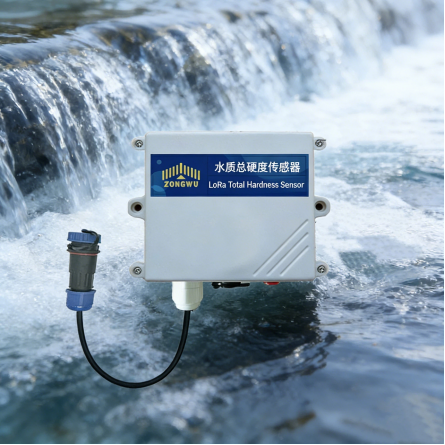
5. Low Environmental Impact: Durable, Low-Maintenance Design for Sustainable Use
Sustainability and low maintenance are key priorities for modern water management—and this sensor delivers on both with its low environmental impact design. First, its low-power LoRaWAN connectivity reduces energy consumption, minimizing the carbon footprint associated with battery replacements (batteries last 2-5 years, compared to 6-12 months for traditional wireless sensors). Second, the sensor’s robust casing is made from corrosion-resistant, eco-friendly materials that resist fouling (buildup of algae or minerals) and withstand harsh chemicals in industrial wastewater. This reduces the need for frequent on-site cleaning or replacement, cutting down on waste and labor costs. Additionally, the sensor is designed to be easily recycled at the end of its lifespan, aligning with global sustainability goals for environmental monitoring.
6. Versatile Deployment: Adaptable to Every Water Monitoring Scenario
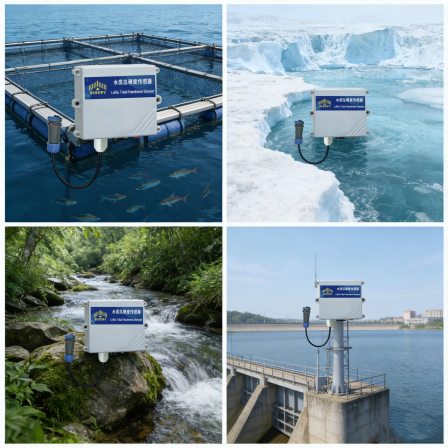
Unlike specialized sensors that only work for one type of water, this device offers unmatched versatility, making it suitable for nearly every water monitoring scenario. It is widely used for online automatic continuous analysis in: industrial wastewater (to comply with environmental regulations and protect equipment), surface water (lakes, rivers, reservoirs to monitor ecosystem health), drinking water (treatment plants and distribution systems to ensure safety and taste), seawater (coastal monitoring, offshore facilities to track saltwater intrusion), and industrial production processes (to maintain quality control). Its compact design allows for easy installation in pipelines, tanks, or open water, and it is compatible with most existing LoRaWAN collectors and IoT dashboards—so you don’t need to replace your entire monitoring system to upgrade.
7. Real-Time Data & Cloud Integration: Proactive Risk Management at Your Fingertips
The final advantage of this sensor is its ability to deliver real-time data and seamless cloud integration, turning raw measurements into actionable insights. Once connected to the LoRaWAN collector, the sensor transmits data wirelessly to a central cloud platform (compatible with popular IoT tools like ThingSpeak, AWS IoT, or custom dashboards) in real time. This means you can access hardness readings, temperature data, and sensor status from any device (computer, tablet, smartphone) anywhere in the world. The platform also allows for custom alerts: set thresholds for hardness levels, and you’ll receive instant notifications via email or SMS if readings spike or drop—enabling you to respond quickly to potential issues (like a sudden increase in industrial wastewater hardness) before they become costly problems. This shifts water monitoring from "reacting to crises" to "preventing them altogether."
Why the LoRaWAN Total Hardness Sensor Is the Future of Water Monitoring
Water hardness monitoring doesn’t have to be slow, costly, or unreliable. The LoRaWAN Water Quality Total Hardness Sensor combines seven key advantages—unmatched accuracy, ATC functionality, LoRaWAN connectivity, aviation connector reliability, low environmental impact, versatile deployment, and real-time cloud integration—to solve the most pressing pain points in modern water management. Whether you’re an industrial plant manager looking to reduce maintenance costs, an environmental agency tracking ecosystem health, or a water supplier ensuring safe drinking water, this sensor delivers the data you need, when you need it, without the hassle of traditional monitoring methods. As IoT technology continues to transform environmental monitoring, the LoRaWAN Total Hardness Sensor stands out as a game-changer—turning hidden water hardness risks into manageable, preventable challenges.
Contact: Qui
Phone: 18146178586
Tel: 18146178586
Email: qui@zonewu.com
Add: 1501-3, Building F03, Phase III, Software Park, Jimei District, Xiamen City, Fujian Province, China