Welcome: Xiamen ZoneWu Technology Co., LTD.

qui@zonewu.com
18146178586
In 2026, the global water quality monitoring sector is witnessing a wave of regulatory upgrades. From the updated EU Water Framework Directive and revised U.S. Clean Water Act to the new standards issued by the International Organization for Standardization (ISO), all send the same signal: water quality monitoring must become stricter, smarter and more traceable.
· EU: The updated EU Water Framework Directive adopted in February this year has added more emerging pollutants to the monitoring list, requiring member states to fully meet the standards in the coming decades. This means more sophisticated online monitoring equipment must be deployed in drinking water sources, swimming pools and wastewater treatment plants.
· U.S.: The U.S. Environmental Protection Agency (EPA) proposed new water quality certification rules under the Clean Water Act in January, requiring projects involving water discharge to provide more reliable and continuous water quality monitoring data to prove consistent compliance with discharge standards.
· International Standards: ISO released a new version of water quality sampling standards this year, providing more detailed technical guidelines for monitoring of various water bodies. The iteration of these standards is driving monitoring technologies toward automation, precision and continuity.
Faced with increasingly stringent regulations, water managers are confronted with common challenges:
· Difficulty in remote site monitoring. Many water sources and rural water supply points are located in remote areas with difficult power access, making it hard to deploy traditional online equipment. Manual regular sampling incurs high costs and fails to meet the requirement of continuous data.
· Questionable data authenticity. New regulations generally emphasize data quality, requiring data to be authentic, accurate and traceable. Traditional manual records or single sampling can hardly prove compliance.
· High operation and maintenance (O&M) costs. Frequent battery replacement and equipment calibration lead to high labor and time costs in remote areas.
Against this international backdrop, smart devices such as the LW104S LoRaWAN Solar-Powered Water Quality Residual Chlorine Sensor stand out with their prominent advantages.
The device adopts a solar power supply + large-capacity lithium battery combination, equipped with a 0.88W solar panel and 3400mAh battery, enabling long-term stable operation powered by sunlight. It can be easily deployed in mountain water sources in Europe, rural water supply stations in Africa, and monitoring points on remote islands in Southeast Asia, realizing true full coverage.
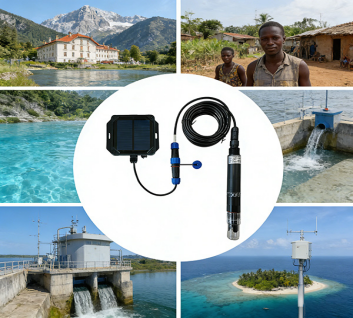
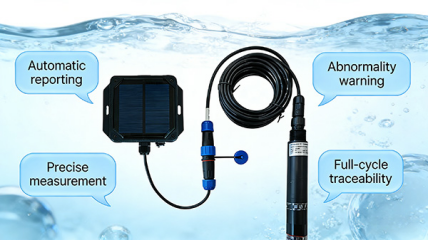
To meet the stringent requirements of various countries for data authenticity, this sensor provides a complete solution:
· Automatic reporting: Direct cloud upload via LoRaWAN network, reporting once every 30 minutes by default with no manual intervention throughout the process
· High-precision measurement: Electrochemical principle, measuring range 0.00–20.00mg/L, resolution 0.01mg/L, error ±5%FS
· Abnormal alarm: Automatically reports fault codes when the sensor is abnormal or voltage is too low for timely handling
· Full-cycle traceability: Each data report is time-stamped, and historical records can be traced back at any time
The battery life can reach more than 3 years under normal use. This means almost no maintenance is needed after deployment, greatly cutting long-term O&M costs for remote sites.
Supports remote configuration via downlink commands: adjusting reporting cycle, performing zero calibration, and restarting the device. If a country’s regulation requires changing the monitoring frequency from 30 minutes to 15 minutes in the future, batch updates can be completed in the office without on-site visits.
Supports mainstream global LoRaWAN bands including CN470, EU868, US915 and AS923, enabling seamless access to local networks no matter where it is deployed.
The tightening of global water regulations is essentially to promote the industry to develop in a more standardized and intelligent direction. Solar-powered free chlorine sensors solve power supply problems with green energy, ensure data authenticity through the Internet of Things, and reduce operating costs with intelligent functions. They are not only a tool for regulatory compliance, but also a key step to realize the modernization of water quality monitoring.
The future of water quality monitoring will undoubtedly be data-driven, unattended and real-time online. The regulatory wave is coming—are you ready?https://www.zonewu.com/en/Water-quality-sensor.html
Contact: Qui
Phone: 18146178586
Tel: 18146178586
Email: qui@zonewu.com
Add: 1501-3, Building F03, Phase III, Software Park, Jimei District, Xiamen City, Fujian Province, China