Welcome: Xiamen ZoneWu Technology Co., LTD.

qui@zonewu.com
18146178586
1.Dissolved Oxygen Concentration and Saturation: Core Monitoring Parameters in Aquaculture and Core Performance of Sensors
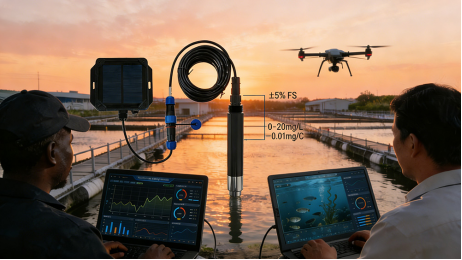
The concentration of dissolved oxygen (DO) is the core monitoring parameter in aquaculture. Aquatic organisms such as fish, shrimp, and crabs rely on dissolved oxygen in the water for respiration. When the concentration is below the critical value, problems such as floating heads, loss of appetite, and even death will occur. The dissolved oxygen sensor adopts the fluorescence measurement principle, which does not consume oxygen or electrolytes. Its measurement range covers 0–20 mg/L, fully meeting the actual needs of aquaculture. The measurement error is only ±3% full scale (FS), and the resolution reaches 0.01 mg/L, which can accurately capture subtle changes in dissolved oxygen in the water, avoiding aquaculture losses caused by insufficient dissolved oxygen. For high-density aquaculture scenarios, the sensor supports an adjustable reporting cycle of 1–65535 seconds. Farmers can shorten the monitoring interval according to the aquaculture density, grasp the dynamics of dissolved oxygen in real-time, and turn on the oxygenation equipment in a timely manner.
The saturation and concentration of dissolved oxygen complement each other and are important supplementary parameters reflecting the dissolved oxygen status of water bodies. This sensor can simultaneously monitor the dissolved oxygen saturation in the range of 0–200%. Combined with the built-in automatic temperature compensation function, it effectively avoids the impact of water temperature changes on dissolved oxygen measurement. In aquaculture, saturation data can help farmers judge the dissolved oxygen carrying capacity of water bodies. For example, in hot weather, the dissolved oxygen saturation of water bodies tends to decrease, and early warning can prevent large-scale death events caused by oxygen deficiency. Its fluorescent membrane is made of high-quality imported materials, with a normal service life of 1 year, ensuring the stability and accuracy of long-term monitoring.
2.Water temperature monitoring: Regulation of basic environmental parameters and adaptation to the growth of cultured organisms
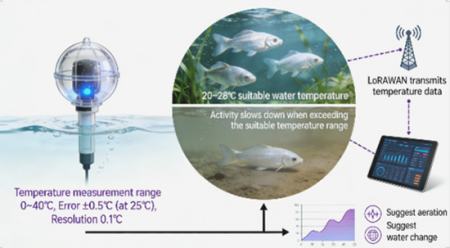
Water temperature is a fundamental parameter affecting aquaculture, directly regulating the metabolic rate, feeding efficiency, and immunity of cultured organisms. The dissolved oxygen sensor has a temperature measurement range of 0–40℃, with an error of only ±0.5℃ (in a 25℃ environment) and a resolution of 0.1℃. It can accurately monitor temperature fluctuations in the aquaculture water. Organisms such as fish are extremely sensitive to changes in water temperature. For example, the suitable growth temperature for common carp is 20–28℃, and exceeding this range will lead to slow growth. The sensor transmits temperature data in real-time through the LoRaWAN protocol, allowing farmers to adjust temperature control equipment based on the data to create a suitable growth environment for the cultured organisms. At the same time, temperature data can also help judge the changing trend of dissolved oxygen, providing a scientific basis for operations such as oxygenation and water change.
3.Battery Voltage Monitoring: Ensuring Continuous Monitoring in Outdoor Scenarios Without Mains Electricity
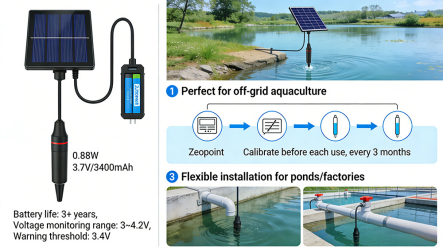
Although battery voltage monitoring does not directly reflect water quality, it is a key parameter to ensure the continuity of monitoring. This sensor adopts a combination of solar power supply and lithium battery, equipped with a 0.88W solar panel and a 3.7V/3400mAh lithium battery. Under normal usage conditions, the battery life can reach more than 3 years. The sensor monitors the battery voltage in real-time (with a measurement range of 3–4.2V). When the voltage is lower than 3.4V, it will stop data reporting and issue an early warning, reminding farmers to check the power supply status in a timely manner to avoid monitoring interruptions caused by equipment shutdown. This design is perfectly suitable for outdoor breeding scenarios such as ponds and lakes where there is no mains power supply, ensuring long-term stable operation.
In addition, the calibration function of the sensor provides double protection for monitoring accuracy. We recommend that the device be calibrated before each measurement, and once every 3 months during long-term use. The calibration frequency can be appropriately adjusted according to the pollution degree of the breeding environment. Through the zero-point calibration and atmospheric pressure writing functions, farmers can adjust parameters according to the actual breeding water conditions (freshwater or seawater) to further improve data accuracy. It supports two installation methods: immersion type and pipeline type, and can flexibly adapt to different breeding scenarios such as ponds and industrial breeding pools, meeting diversified monitoring needs.
4.Empowerment through precise monitoring of multiple parameters: Trends in cost reduction, efficiency improvement, and high-quality transformation of the intelligent aquaculture industry
Under the trend of smart aquaculture, dissolved oxygen sensors, with their ability to monitor multiple parameters in a coordinated manner, convert key indicators such as dissolved oxygen concentration, saturation, and water temperature into quantifiable data. Through the LoRaWAN network, remote transmission and real-time early warning are realized. With this data, aquaculture farmers can scientifically regulate breeding processes such as oxygenation, water change, and feeding, reducing resource waste caused by blind operations and improving breeding efficiency. At the same time, the low-power design of the sensor and the solar-powered mode not only reduce the cost of use but also conform to the development concept of green aquaculture.
As aquaculture transforms towards large-scale, intensive, and intelligent development, accurate water quality monitoring has become an inevitable requirement for the industry's development. The core monitoring parameters of dissolved oxygen sensors have formed a "data bridge" for scientific aquaculture for farmers, which not only effectively reduces breeding risks but also promotes the high-quality development of the aquaculture industry. In the future, with the continuous upgrading of sensing technology, water quality monitoring equipment will realize integrated monitoring of more parameters, injecting stronger impetus into smart aquaculture.
Contact: Qui
Phone: 18146178586
Tel: 18146178586
Email: qui@zonewu.com
Add: 1501-3, Building F03, Phase III, Software Park, Jimei District, Xiamen City, Fujian Province, China