Welcome: Xiamen ZoneWu Technology Co., LTD.

qui@zonewu.com
18146178586
In the field of water quality monitoring, equipment selection concerns not only data accuracy but also the stability and maintenance costs of the entire system. Especially for key indicators such as nitrite (NO₂⁻), choosing a sensor that is both accurate and easy to deploy poses a common challenge for many environmental engineers and project managers.
From the perspective of product selection, this article discusses why the LW116D LoRaWAN Integrated Nitrite Ion Transmitter has become an ideal choice for numerous industrial wastewater, surface water, and drinking water projects.
1. Accurate Selection Starts with "Parameter Matching"
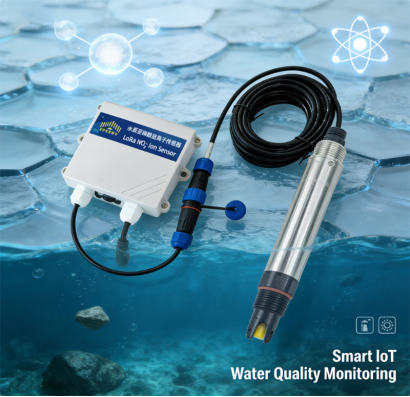
The first step in selection is to verify whether measurement requirements match product performance. The nitrite sensor has a measuring range of 0–2 mg/L, a high resolution of 0.001 mg/L, and an accuracy of ±5%. Equipped with automatic Pt1000 temperature compensation, it effectively reduces interference from ambient temperature fluctuations on measurement results. This configuration is particularly suitable for applications sensitive to low-concentration nitrite changes, such as drinking water source monitoring and agricultural runoff analysis.
2. Communication Method Determines Deployment Flexibility
Most traditional water quality sensors adopt wired transmission, which involves high cabling costs and complex maintenance. In contrast, this nitrite sensor uses LoRaWAN wireless communication, supporting multiple frequency bands including CN470, EU868, and US915, with OTAA Class A/C modes and a default reporting interval of 10 minutes. This enables remote, low-power data transmission even in remote areas or locations with limited network coverage, greatly reducing on-site construction difficulty.
3. Installation and Maintenance Affect Long-Term Operating Costs
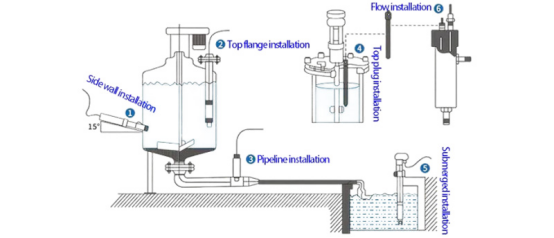
One easily overlooked factor in selection is the convenience of installation and maintenance. The nitrite sensor requires installation at a minimum inclination angle of 15°—inversion or horizontal mounting is prohibited—to ensure measurement stability. Additionally, electrodes are fully calibrated at the factory, eliminating the need for frequent user adjustments. For long-term storage, dry preservation with a protective cap is recommended. These details reflect the product’s thorough consideration of practical application scenarios during the design phase.
4. Interference Resistance Determines Data Reliability
In actual working conditions, nitrite sensors are susceptible to interference from other ions, including CH₃COO⁻, F⁻, Cl⁻, and NO₃⁻. The product manual clearly lists interference factors and the applicable pH range (2.5–11), helping users evaluate the chemical compatibility of water bodies during the selection stage and avoid inaccurate measurements despite normal readings.
Conclusion
The best selection is not the most expensive, but the most suitable.The LW116D LoRaWAN Nitrite Transmitter provides a reliable and cost-effective terminal sensing solution for water quality monitoring through wireless deployment, low power consumption, high resolution, and clear interference control. If your project is seeking a NO₂⁻ sensor that balances performance and usability, this model deserves serious consideration.https://www.zonewu.com/en/Water-quality-sensor.html
Contact: Qui
Phone: 18146178586
Tel: 18146178586
Email: qui@zonewu.com
Add: 1501-3, Building F03, Phase III, Software Park, Jimei District, Xiamen City, Fujian Province, China