Welcome: Xiamen ZoneWu Technology Co., LTD.

qui@zonewu.com
18146178586
With the deep integration of IoT technologies in safety monitoring, LoRa carbon monoxide (CO) sensors are gradually replacing traditional wired solutions thanks to their long-range and low-power advantages. Given the wide variety of products on the market, how can you select the right model based on actual needs? This article breaks it down into five key dimensions.
1. Core Sensing Element: Electrochemical Type Remains Dominant
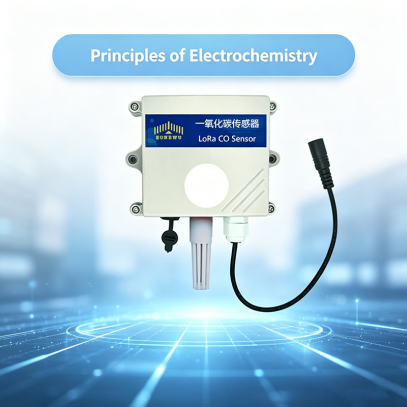
The "heart" of a CO sensor is its gas-sensing component. Almost all mature solutions on the market today adopt the electrochemical principle, which features excellent linearity, low cross-interference, and a service life of up to 2–3 years.Be wary of low-cost products using semiconductor sensors: although inexpensive, they are highly susceptible to temperature and humidity variations and have poor gas selectivity, making them unsuitable for industrial safety scenarios.During selection, always check the sensor model in the datasheet and verify whether self-diagnosis and failure alarm functions are included.
2. Measuring Range & Resolution: Matching Actual Exposure Levels
CO concentration ranges vary significantly across different locations:
· Underground parking lots & tunnels: Short-term concentrations can reach 50–200 ppm. A measuring range of 0–500 ppm with 0.1 ppm resolution is recommended.
· Industrial boiler rooms & mines: Risk of high-concentration leaks above 500 ppm requires a range of 0–1000 ppm or higher, with 1 ppm resolution sufficient.
· Commercial buildings & residences: Focused on preventing low-concentration accumulation; a 0–200 ppm range is adequate.
Note: An excessively wide measuring range may compromise low-concentration accuracy, so avoid blindly pursuing high ranges.
3. LoRa Communication Parameters: The Trade-Off Among Frequency Band, Data Rate & Power Consumption
LoRa selection requires balancing transmission distance, data rate, and battery life:
· Frequency band: Confirm compliance with local regulatory bands (CN470 for China, EU868 for Europe, US915 for the US). Multi-band products offer greater flexibility but require re-verification of antenna efficiency.
· Transmission power: A maximum of 20 dBm (100 mW) is common; in practice, power can be dynamically adjusted via ADR (Adaptive Data Rate). For long-range applications (e.g., several kilometers in mining areas), select models supporting adjustable power and high-gain antennas.
· Reporting strategy: Dual-mode support (threshold trigger + periodic reporting) is recommended. Under normal concentrations, a heartbeat packet is sent hourly; once thresholds are exceeded, an alarm is transmitted immediately upon wake-up. This strategy can extend battery life to 2–3 years (based on a 19000 mAh lithium-thionyl chloride battery).
4. Environmental Adaptability: Protection Rating & Temperature Range
Most CO sensors are deployed outdoors or in industrial environments, so the following requirements should be met during selection:
· Ingress protection: At least IP65 (dust-tight, protected against water jets); IP67 (temporary immersion) is required for harsh environments.
· Operating temperature: Electrochemical sensors function normally between −20°C and 50°C, but battery discharge capacity degrades at low temperatures. For use in −40°C environments, low-temperature-resistant lithium-thionyl chloride batteries must be specified, and sensor heating compensation must be confirmed.
· Explosion-proof certification: For coal mines and chemical industrial parks, Ex ib or Ex d explosion-proof certificates are mandatory.
5. Platform Compatibility & Ease of Maintenance
Software aspects should not be overlooked during selection:
· Network protocol: Prefer products compatible with standard LoRaWAN 1.0.2 or above to avoid vendor lock-in caused by proprietary protocols.
· OTA upgrade: Models supporting remote firmware updates allow later adjustments to power consumption strategies or algorithm enhancements.
· Calibration & replacement: Confirm whether the sensor module is pluggable and whether the manufacturer provides original calibration services. Some high-end products feature automatic baseline calibration, reducing the frequency of manual maintenance.https://www.zonewu.com/en/-Gas-Sensor.html
Contact: Qui
Phone: 18146178586
Tel: 18146178586
Email: qui@zonewu.com
Add: 1501-3, Building F03, Phase III, Software Park, Jimei District, Xiamen City, Fujian Province, China