Welcome: Xiamen ZoneWu Technology Co., LTD.

qui@zonewu.com
18146178586
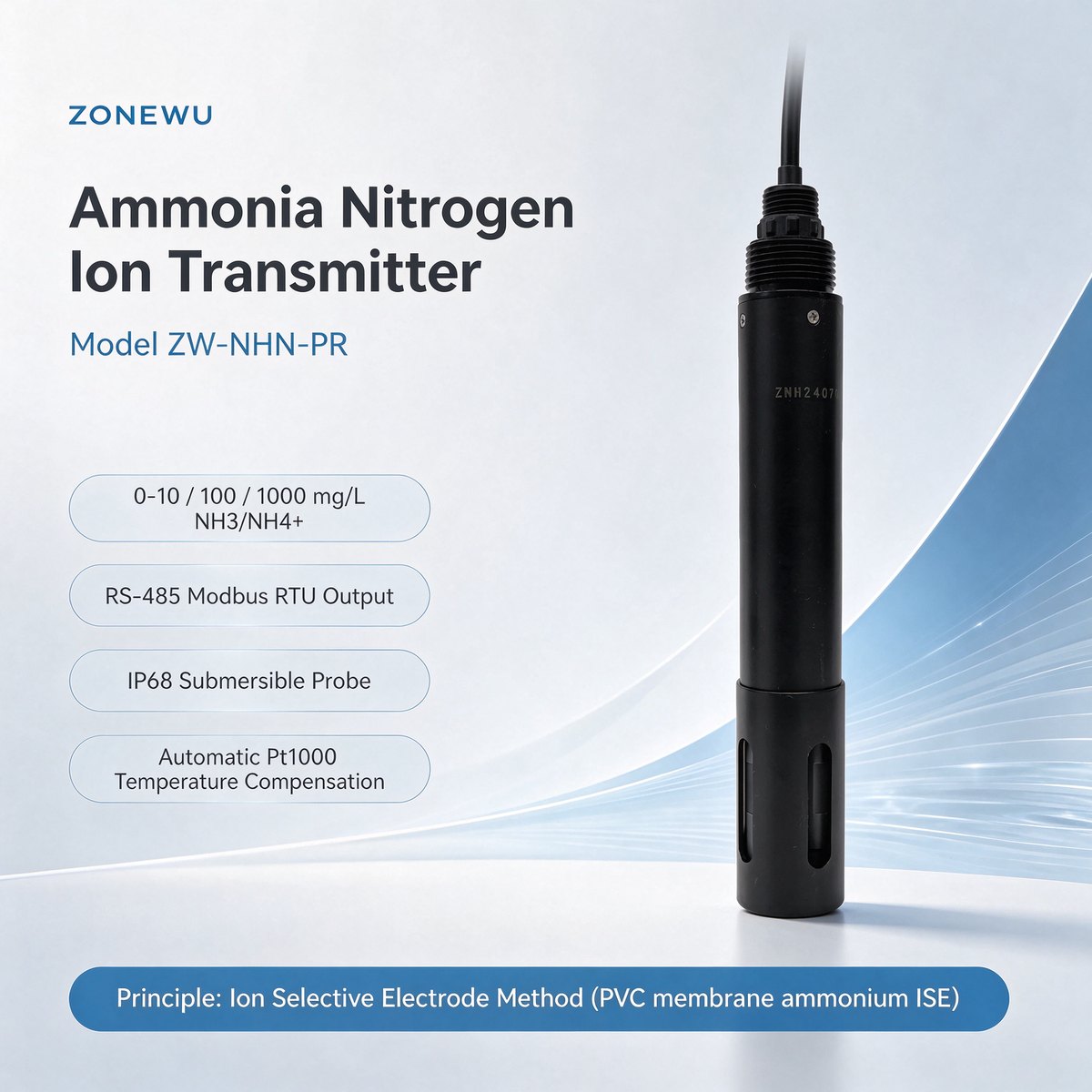
Ammonia nitrogen (NH3/NH4+), nitrite (NO2-) and nitrate (NO3-) form the nitrification chain: ammonia is converted to nitrite and then nitrate. Tracking them separately shows where a water body or treatment process stands in that chain. This guide covers how to read ion probes, match range and accuracy to the water, and choose between a wired RS485 transmitter and a wireless LoRaWAN probe.
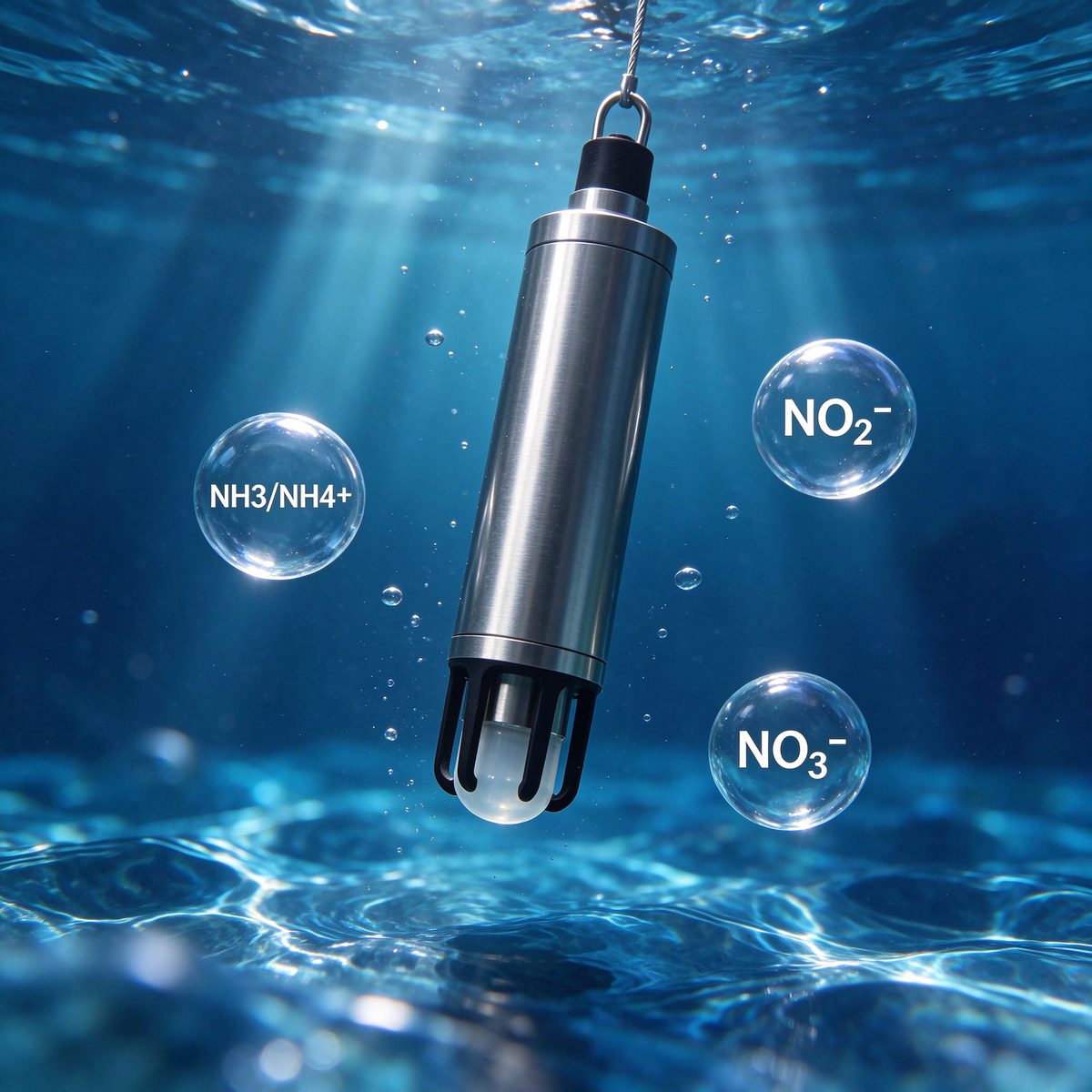
Ammonia nitrogen (NH3/NH4+): Main nitrogen load in untreated or weakly treated effluent, manure-contaminated water and recirculating aquaculture. High ammonia stresses aquatic life and points to insufficient nitrification.
Nitrite (NO2-): Intermediate product of nitrification. Persistent nitrite means an unstable or incomplete nitrification stage; it is toxic to fish and beneficial bacteria.
Nitrate (NO3-): Final oxidized form. Elevated nitrate usually follows completed nitrification and is tracked for effluent discharge and agricultural runoff.
Measuring the three together shows whether nitrogen removal is progressing; one parameter alone cannot show the full treatment state.
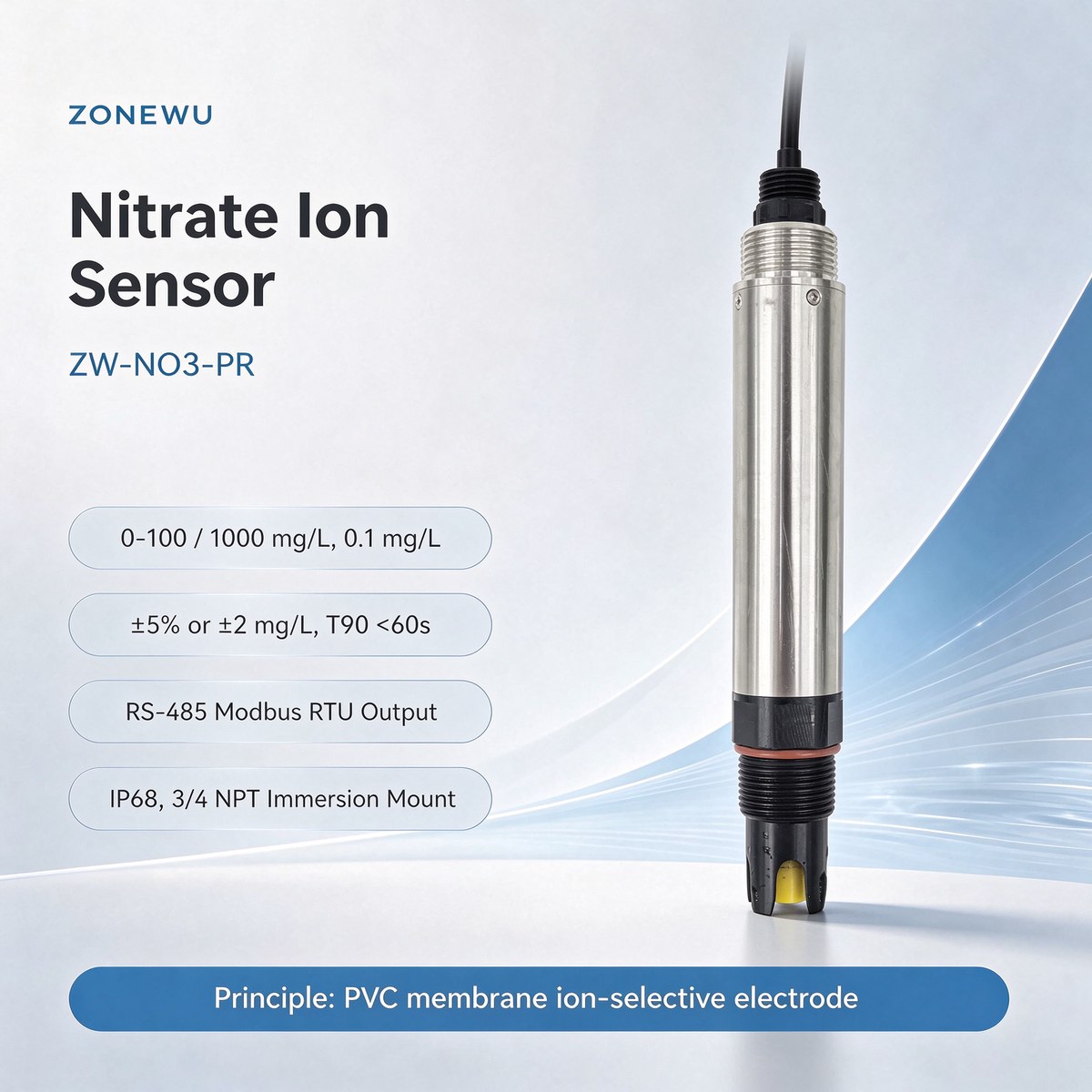
ZONEWU water ion probes use a PVC membrane ion-selective electrode (ISE): the membrane develops a potential proportional to the target ion activity, which the transmitter converts to a concentration reading.
Calibration: Two-point calibration sets the electrode slope before deployment.
Temperature compensation: RS485 probes use automatic Pt1000 compensation; LoRa ion probes measure water temperature separately for manual compensation.
Membrane head life: The electrode head is a consumable, typically 3–6 months; replace it when readings drift or response slows.
Ion interference: Ion sensors are more susceptible to interfering ions in the water. Match the probe to water chemistry and plan periodic inspection and head replacement.
Wired RS485 transmitters connect to PLC, DCS or monitoring software over Modbus RTU, suiting fixed points on an existing wired control network with stable power.
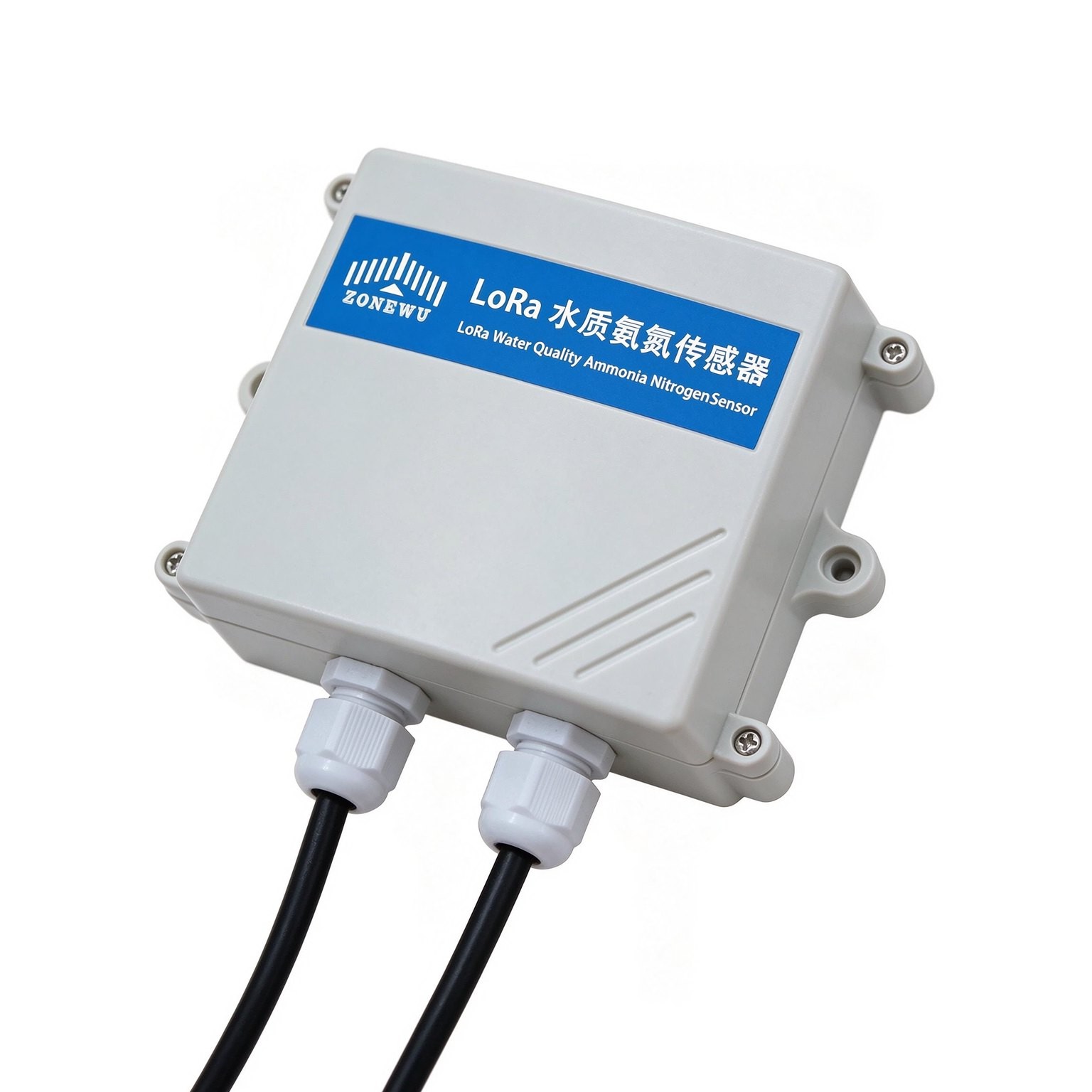
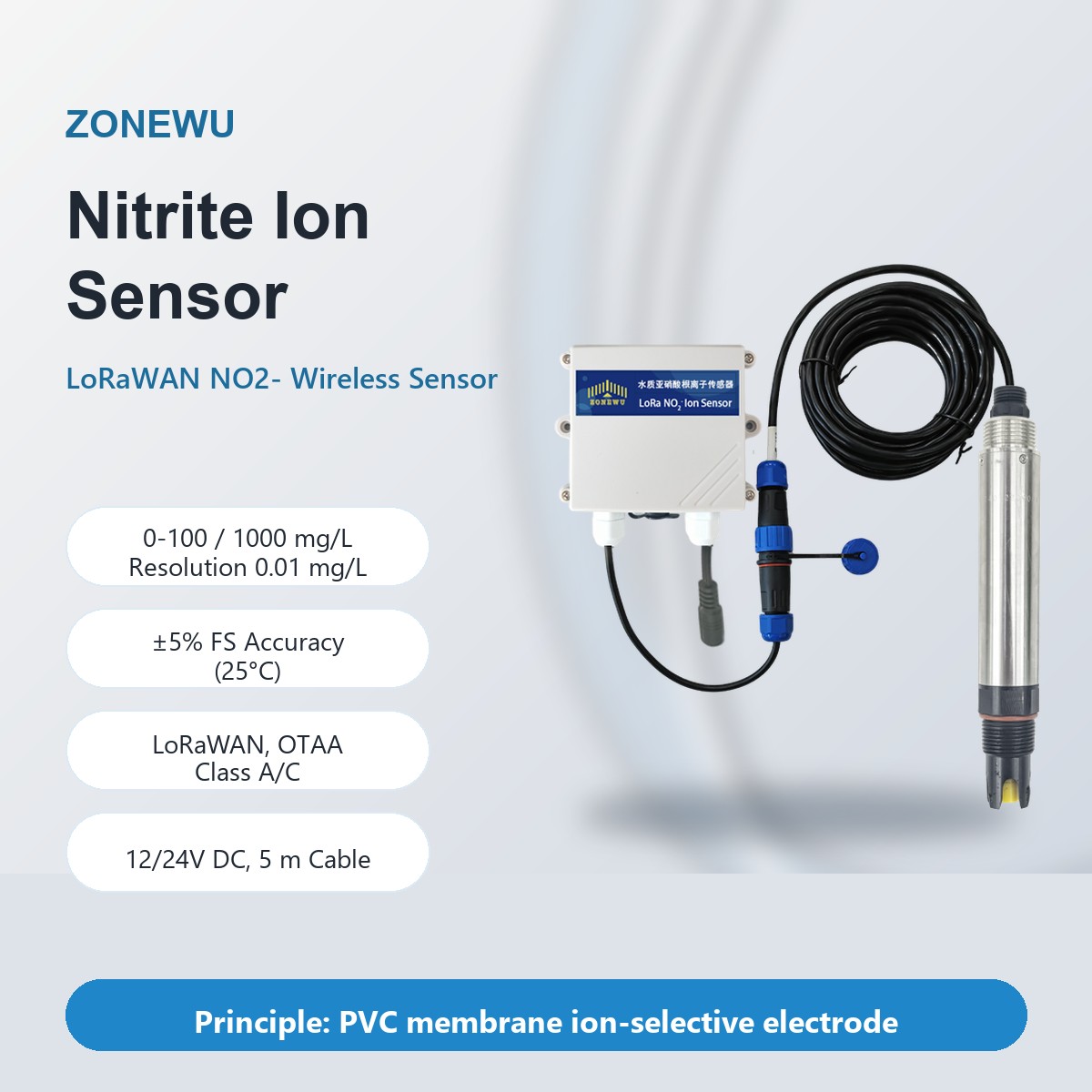
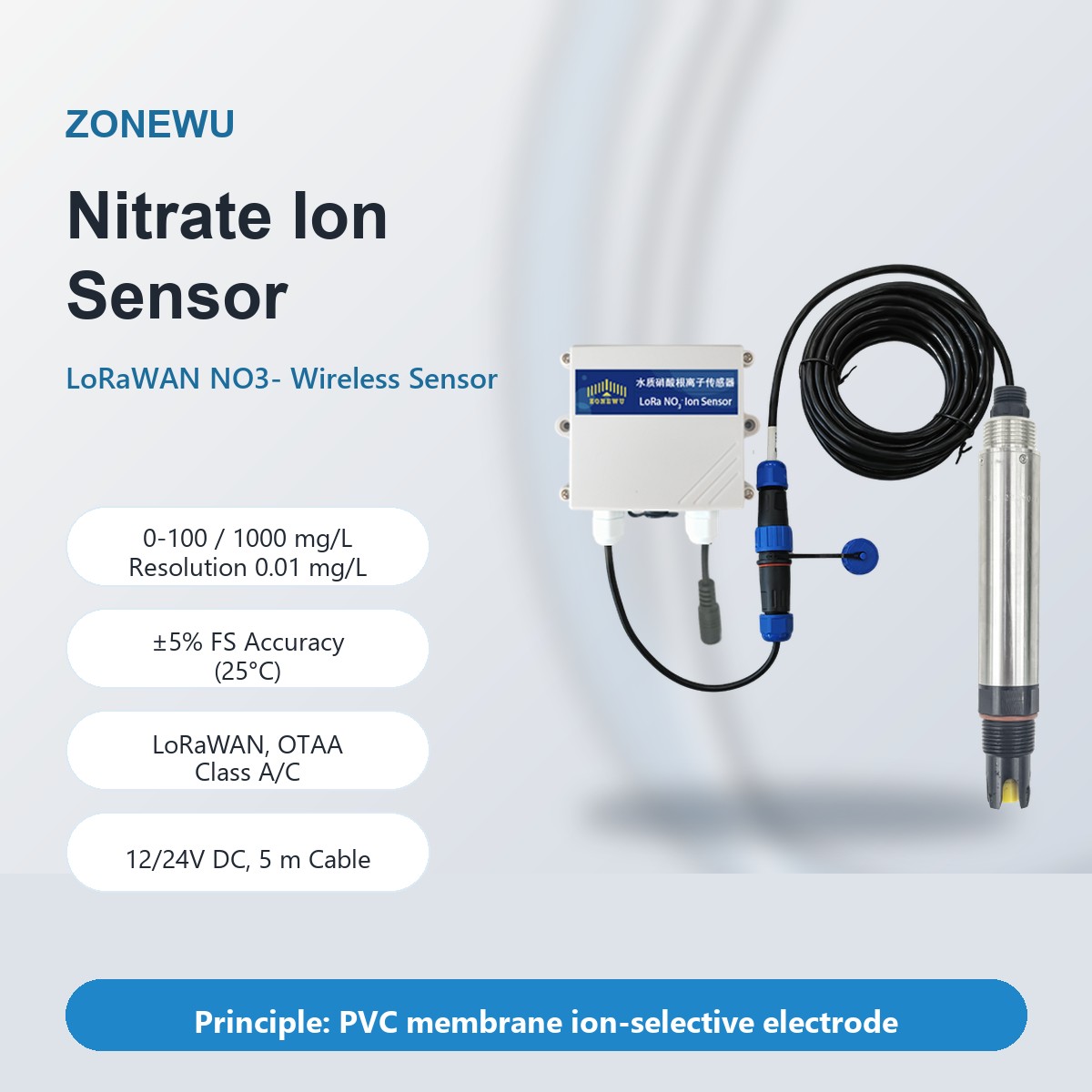
LoRaWAN wireless probes suit dispersed, off-grid or widely separated sites. They report over LoRaWAN (LoRa TDMA, OTAA/ABP) and connect through an IoT Gateway to the cloud for remote viewing and alarms. Bands include AS923-1/2/3/4, CN470, IN865, EU868, RU864, US915, AU915 and KR920.
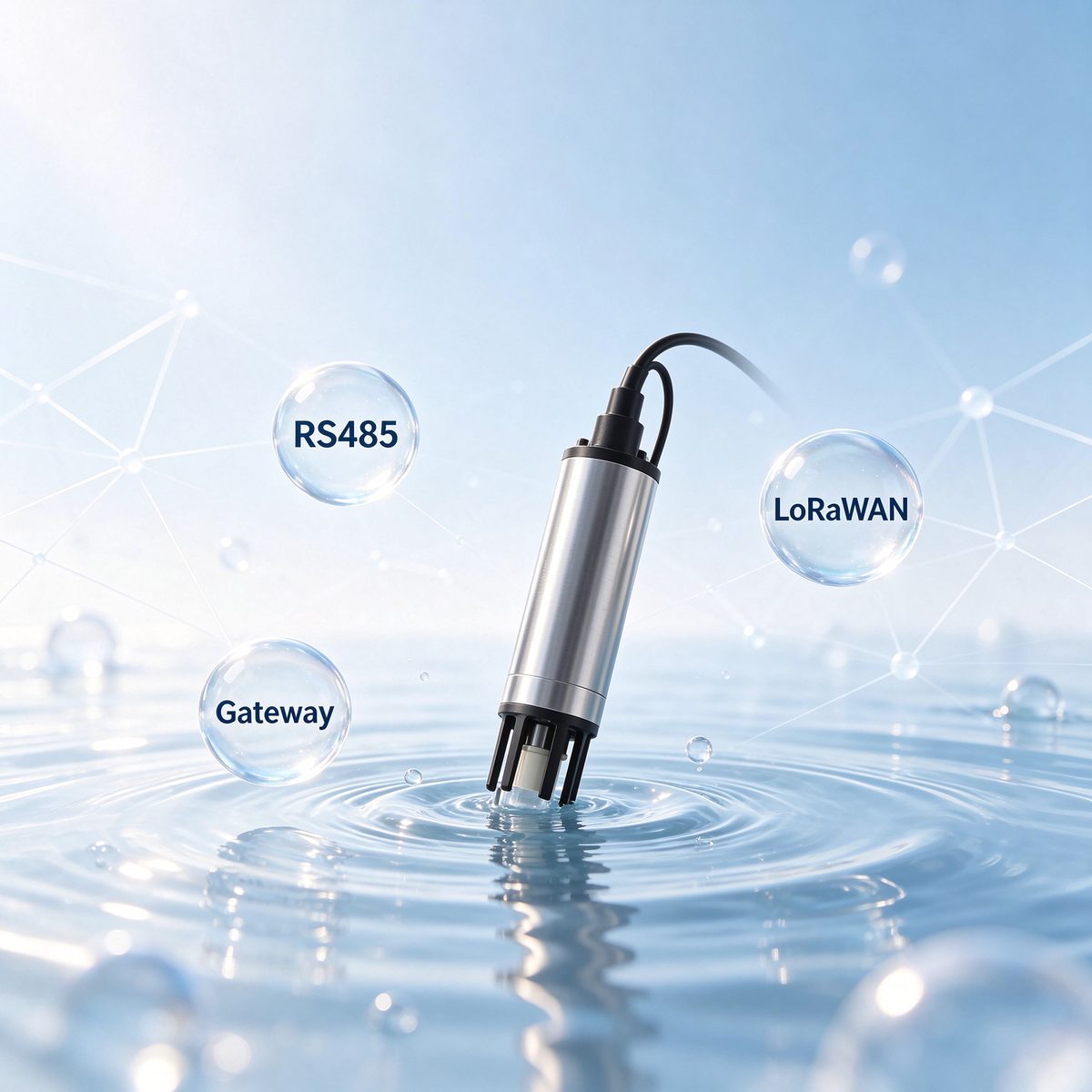
Start from the ion you need to measure, then choose wired RS485 for a fixed PLC/DCS point or LoRaWAN for a remote, off-grid node through a gateway. Each card links to its product page for the full specification table.
| Measured ion | RS485 wired | LoRaWAN wireless |
|---|---|---|
| Ammonia nitrogen (NH3/NH4+) |
ZW-NHN-PR Ammonia Transmitter (108) NH3/NH4+ 0-10 / 100 / 1000 mg/L · RS485 Modbus RTU |
LoRa Ammonia Nitrogen Sensor (116) NH3/NH4+ 0-10 / 100 / 1000 mg/L · LoRaWAN OTAA/ABP |
| Nitrite (NO2-) |
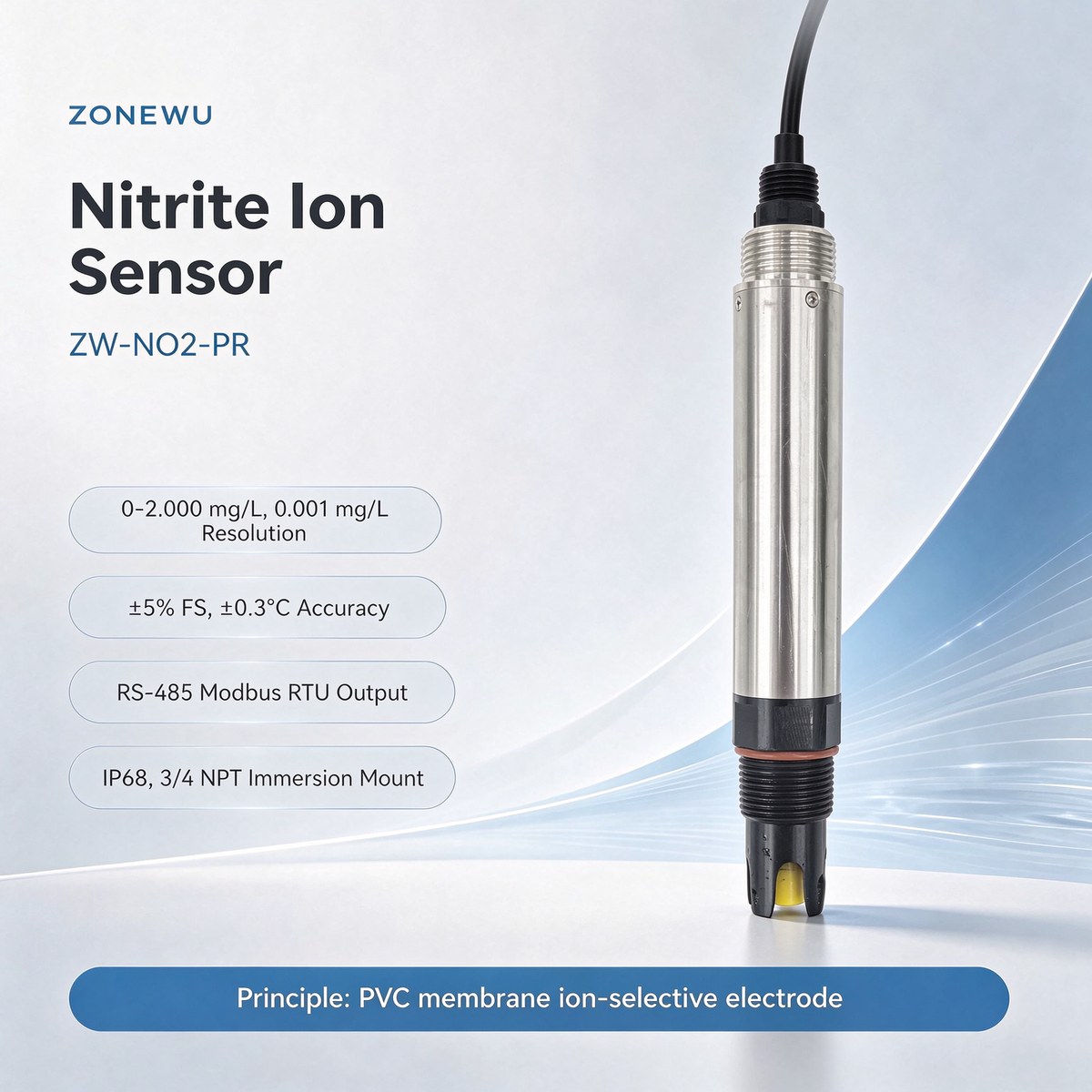
ZW-NO2-PR Nitrite Sensor (210) NO2- 0-2.000 mg/L, 0.001 mg/L · RS-485 Modbus RTU |
NO2- 0-100 / 1000 mg/L · LoRaWAN OTAA Class A/C |
| Nitrate (NO3-) |
ZW-NO3-PR Nitrate Sensor (211) NO3- 0-100 mg/L (0-1000 optional) · RS-485 Modbus RTU, 4-20 mA optional |
NO3- 0-100 / 1000 mg/L · LoRaWAN OTAA Class A/C |
Other ion families (chloride, potassium, calcium, sodium, total hardness) are listed on their product pages; this guide covers the nitrogen chain only.
Wastewater treatment: Track ammonia through aeration and nitrification, add nitrite to watch stability, and nitrate at the effluent outlet. RS485 transmitters fit a plant SCADA/PLC; LoRa probes suit scattered or retrofitted points without a wired network.
Aquaculture and hatcheries: Ammonia and nitrite are the key stress indicators for fish and shrimp. Check the LoRa reporting cycle; ion probes draw higher power and very short cycles reduce battery life.
Surface water, rivers and reservoirs: Nitrate and ammonia support eutrophication and runoff early warning; wireless nodes on remote banks avoid cable runs to the water.
Industrial process water: RS485 Modbus integration is usually the cleaner fit where a wired network and local power are already in place.
Clean the membrane head and probe body regularly to prevent biofilm; inspect before long-term immersion.
Calibrate on schedule with the two-point method; replace the membrane head when readings drift or response slows.
Check the cable gland and submerged housing for sealing, and confirm pressure rating for the installation depth.
Ammonia, nitrite or nitrate — which to measure? Start from the process stage: raw water points to ammonia; unstable nitrification shows nitrite; treated effluent and runoff are watched for nitrate. Measure the chain together when treatment performance is the question.
RS485 or LoRaWAN? Use RS485 Modbus RTU for fixed points in an existing PLC/DCS or wired network; use LoRaWAN for remote, off-grid or dispersed nodes through a gateway.
What range should I choose? Keep typical readings in the middle to upper part of the scale. Do not reuse a wireless wide-range probe's range for a wired narrow-range model; compare each model's specification table.
How long does an ion electrode last? The membrane head is a consumable, typically 3–6 months; warranty and head replacement terms are listed on each product page.
Define which nitrogen parameters your water body needs, match range and accuracy to the expected concentration, and choose RS485 for wired integration or LoRaWAN for remote nodes. Review the ZONEWU ammonia transmitter, LoRa ammonia sensor, RS485 nitrite sensor, LoRa NO2- sensor, RS485 nitrate sensor and LoRa NO3- sensor, or connect through the IoT Gateway for remote water quality monitoring. Related readings: the LoRa nitrate sensor buying guide (234) and the LoRaWAN nitrite sensor article (236).
Contact: Qui
Phone: 18146178586
Tel: 18146178586
Email: qui@zonewu.com
Add: 1501-3, Building F03, Phase III, Software Park, Jimei District, Xiamen City, Fujian Province, China