Welcome: Xiamen ZoneWu Technology Co., LTD.

qui@zonewu.com
18146178586
In industrial IoT, smart agriculture, utility tunnel monitoring and other scenarios, real-time monitoring of oxygen concentration, temperature and humidity is critical to safety and efficiency. With an increasing number of LoRaWAN sensors available on the market, how can you accurately select a reliable, easy-to-use and cost-effective device? Taking the LW305 LoRaWAN O₂ Temperature & Humidity Sensor as an example, this article summarizes a practical purchasing guide to help you focus on core points during selection.
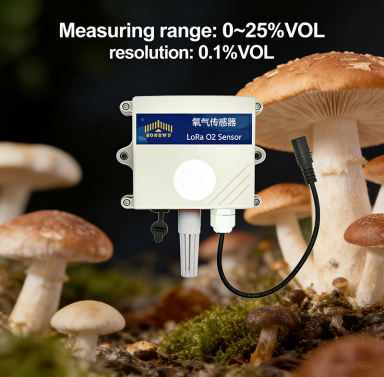
First, check the measurement range and accuracy before purchasing. The LW305 has an oxygen measurement range of 0–25% VOL with a resolution of 0.1% VOL, covering oxygen concentrations in common environments (approximately 20.9% VOL in normal air). It features a temperature measurement range of -40°C to +80°C with ±0.3°C accuracy, and a humidity measurement range of 0–99.9%RH with ±2%RH accuracy. If your application involves extreme environments (such as high humidity or low temperatures), note the manual warning: continuous use in environments above 95%RH for more than half a month is not recommended.
Power supply is also critical: it supports a wide voltage input of 5–28VDC, equipped with a DC 5.5×2.1 port and a Type-C port for convenient on-site power access or temporary configuration.
When purchasing, it is necessary to confirm whether the LoRaWAN frequency band supported by the device matches your gateway or network server. The LoRaWAN O ₂ temperature and humidity sensor covers CN470/IN865/EU868/RU864/US915/AU915/KR920/AS923, which basically meets the needs of major regions around the world. Simultaneously confirm the network access mode: support OTAA, default Class C working mode (switchable to Class A), which is very important for scenarios that require the server to actively issue instructions (such as real-time threshold modification).
Easy device configuration directly improves deployment efficiency. The LW305 supports Type-C serial port configuration; parameters including DevEUI, AppEUI, AppKey, frequency mask and reporting interval can be modified via the PC tool (LoRa_config). The default factory triple credentials are public sample values, so custom settings are recommended for formal use to avoid network conflicts.
Note: The configuration tool requires the CH340 driver. Before purchasing, confirm that your team has a Windows computer and basic serial debugging capabilities. For bulk configuration, contact the supplier to inquire about custom firmware services.
In practical monitoring, simply reporting at regular intervals is often insufficient, and the ability to immediately alert in case of abnormalities is crucial. LW305 allows setting upper and lower limit trigger values for oxygen concentration (actual value x 10, adjustable range 1~65535). When the concentration exceeds the limit, the device will immediately report 3 times (the number of times can be adjusted, default 3 times), with an interval of 10 seconds between each time. After returning to normal, report 3 times to ensure that no alarm or recovery events are missed.
Can you evaluate during procurement: Does your business require this' immediate repeat reporting 'mechanism for exceeding limits? Is it necessary to link an external alarm (the manual mentions DO output, but it is not triggered by default)? If there are special requirements, the hardware export capability should be confirmed with the supplier.
The sensor has a lifespan of less than 2 years (electrochemical principle), and zero-point calibration is recommended every 6–12 months. Calibration can be triggered remotely via downlink command (0x14) without disassembly. Note: Before calibration, ensure the sensor has been powered on for at least 5 minutes (24 hour aging required for long-term unused devices) in a well-ventilated area. If calibration fails, the system actively reports a failure code.
For installation, the LW305 supports wall mounting and has a compact size (as shown in the manual diagram). A Type-C data cable is included, while a power adapter (5–28VDC) must be prepared separately. It is recommended to purchase a compliant DC power supply together to avoid abnormal reporting caused by unstable power supply.
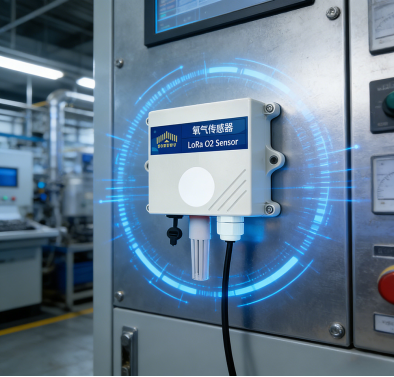
When selecting a LoRaWAN oxygen, temperature and humidity sensor, check the following items one by one: measurement range, frequency band compatibility, ease of use of the configuration tool, flexibility of the alarm strategy, and calibration and maintenance costs. The LW305 performs well in all these aspects and is suitable for most industrial and agricultural environments. Finally, be sure to obtain the latest user manual and configuration tool from the supplier before purchase to ensure network access and data parsing comply with your platform requirements.https://www.zonewu.com/en/-Gas-Sensor.html
Contact: Qui
Phone: 18146178586
Tel: 18146178586
Email: qui@zonewu.com
Add: 1501-3, Building F03, Phase III, Software Park, Jimei District, Xiamen City, Fujian Province, China